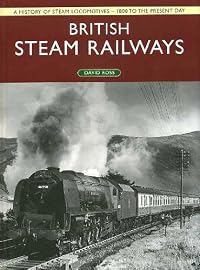
British Steam Railway was written by David Ross and first published in 2002 by Parragon books. Having worked in publishing for over 25 years before becoming a full time author and transport historian, David has written or contributed to over 40 books.
Covering the history of the train from the first steam
powered ‘travelling engine’ 1804 built by Richard Trevithick, a Cornish
Engineer, through the pioneering years of Stevenson Rocket that shocked
spectators after achieving a top speed of 29 mph to the modern steam trains of
the early twentieth century.
The book is a not only comprehensive history of the
development of the steam train but also provided insight into the four main
companies as they grew building the railway network including maps before being
nationalised under the amalgamation and railway act in 1921. During the
building of the network the author provides details of the problems that arose
during the construction of some engineering masterpieces including the Tay and
Forth bridges and the Severn tunnel which opened after 14 years of excavation.
As you read through the history, there are some excellent
black and white and colour photographs of the
steam trains for each era intertwined
between the text. With many well know steam included within the book including
The Mallard, Duchess, The Great Marques, Caerphilly Castle, Flying Scotsman and
many more not only to see but to read their specifications such as weight, cylinders,
fuel, steam pressure etc. David has also included carriages in his book, again
with great detail of their full history.
Not all images are photographs with engravings made during
the world’s first underground railway being built in 1868 by digging out the
junction at Baker Street for the Uxbridge line which opened in 1963. Other
later engraving shows divers recovering an engine that fell into the river Tay,
after being hoisted up and repaired it ran for many years after although "The
Diver" as it became known would not be taken by any engine driver over the
new Tay Bridge.
Although I am not an avid reader especially historical books,
I enjoyed reading this not only as I saw and photographed a couple of the
trains contained within, but because David has provided great insight without
becoming too technical. The history intermingled with the maps, drawings,
photographs and specifications has a good balance which keeps the reader’s
attention and makes you want to learn more. Overall I would recommend this book
to anyone interested in steam trains and their history.


