Friday, 8 August 2014

Painting by light

This was accidently deleted so have re posted it


Painting by light
Having experimented with photo joining, double exposure, pinhole photography and using a black out curtain it was time to undertake the last element of the course, painting by light.

With my Canon EOS 60D attached to the tripod various props available to use we proceeded to prepare the experiment. With the light turns off to create dark room a torch beam was moved around the objects to highlight different areas. The only exception to this was for the 

Image 7477 was created slightly different as two bicycle wheels were spun in stationary red and white light. The camera was set to F8 for 13 seconds, ISO 100 and the open shutter creates a dome like appearance. A singular bicycle wheel was using the same method was used to create the head in a domed cage described in my previous blog.

Image 7501 was created using an open bottle of red wine, a half full glass and the corkscrew places on the table for the prop. The camera was set to F8 for 30 seconds, ISO 100 and with the lights off to create a dark room a touch light was shone around the prop to light various areas. 

Image 7510 and 7511 was created using a bottle of cider and an apple cut in half as the prop. Each shot had the same camera settings F8 for 15 seconds, ISO 100 but as you can see as the light was shone in alternative locations for different lengths of time the results remarkably different. The first is far experiment has a blue appearance with the second far brighter with a crisp image.

Image 7518 was created using a flute laid on a very uneven black table cloth. The Camera was set to F8 for 10 seconds, ISO 100 with the torch again being moved up and down the flute in swaying action. The final result shows the stainless steel flute gleaming against the creased black table cloth.


The painting by light experiment is very quick and cheap to set up, fun to photograph and as you can see from the images on the contact sheets below easy to create some extremely interesting results.
Whilst creating the caged domes the bicycle wheels went off course on the floor but although the final image was not what I had hoped to create, there are some great shapes produced. Holding two wheels in your hands also proved very difficult especially ensuring they span while trying to ensure you limited the movement.

The Images created using cheese and grapes on a cheese board came out blurred caused by either having the wrong length of time the lens was open or not enough torch light from the location I stood within the room. As the camera was safely attached to the tripod to ensure it stayed steady we can rule out movement as the cause.

I would recommend you all try this quick easy experiment to see whether you can create some great images of objects and the odd person who is willing to sit with a torch shone on them.

Head in Dome

This was accidently deleted so have re posted


Head in globe - painting by light
This is two photographs taken by painting with light and then merging the two together to make it look like the head is in a globe.  The red cage look is a bicycle wheel with light around it being spun with the main light turned off and then the camera being set to 10 secs on F8 and ISO 100 to capture the wheel spinning. 


The second photograph is a person who was sat in the dark and then a torch was used to go around and light different sections of the person, the camera was set to 10 secs onF5.6 and ISO 100 to capture this.


The two photographs was then put into Photoshop and removing the black areas in between the red cage allowing the photograph of the head to show through.


Monday, 16 June 2014

2nd book review

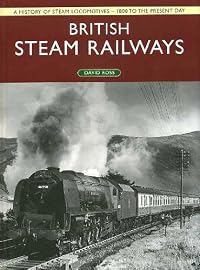
British Steam Railway, by David Ross

British Steam Railway was written by David Ross and first published in 2002 by Parragon books. Having worked in publishing for over 25 years before becoming a full time author and transport historian, David has written or contributed to over 40 books.

                                                      British Steam Railways: David Ross


Covering the history of the train from the first steam powered ‘travelling engine’ 1804 built by Richard Trevithick, a Cornish Engineer, through the pioneering years of Stevenson Rocket that shocked spectators after achieving a top speed of 29 mph to the modern steam trains of the early twentieth century.

The book is a not only comprehensive history of the development of the steam train but also provided insight into the four main companies as they grew building the railway network including maps before being nationalised under the amalgamation and railway act in 1921. During the building of the network the author provides details of the problems that arose during the construction of some engineering masterpieces including the Tay and Forth bridges and the Severn tunnel which opened after 14 years of excavation.

As you read through the history, there are some excellent black and white and colour photographs of the 
steam trains for each era intertwined between the text. With many well know steam included within the book including The Mallard, Duchess, The Great Marques, Caerphilly Castle, Flying Scotsman and many more not only to see but to read their specifications such as weight, cylinders, fuel, steam pressure etc. David has also included carriages in his book, again with great detail of their full history.

Not all images are photographs with engravings made during the world’s first underground railway being built in 1868 by digging out the junction at Baker Street for the Uxbridge line which opened in 1963. Other later engraving shows divers recovering an engine that fell into the river Tay, after being hoisted up and repaired it ran for many years after although "The Diver" as it became known would not be taken by any engine driver over the new Tay Bridge.

Although I am not an avid reader especially historical books, I enjoyed reading this not only as I saw and photographed a couple of the trains contained within, but because David has provided great insight without becoming too technical. The history intermingled with the maps, drawings, photographs and specifications has a good balance which keeps the reader’s attention and makes you want to learn more. Overall I would recommend this book to anyone interested in steam trains and their history.